Expert Videos

Module 1: Understanding Thyroid Cancer

What is thyroid cancer, and what causes it?
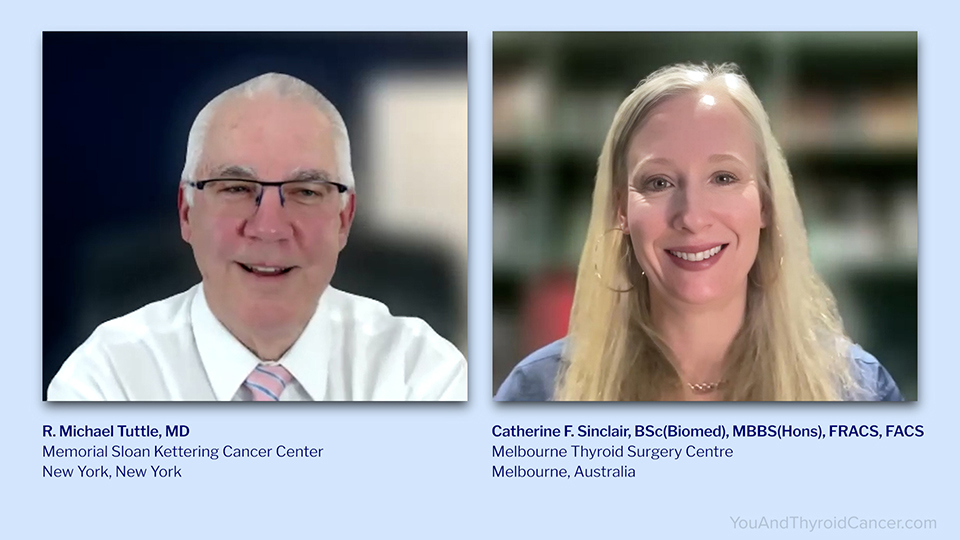
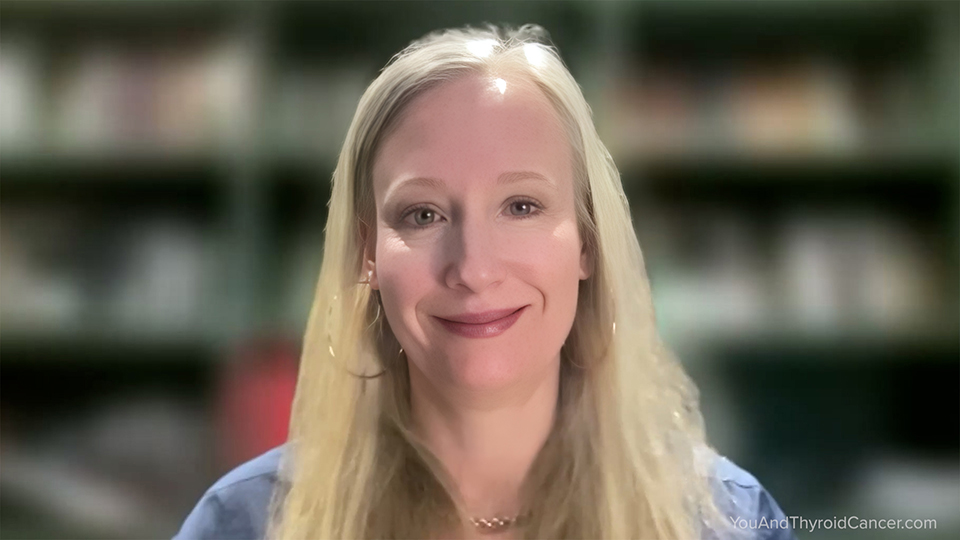
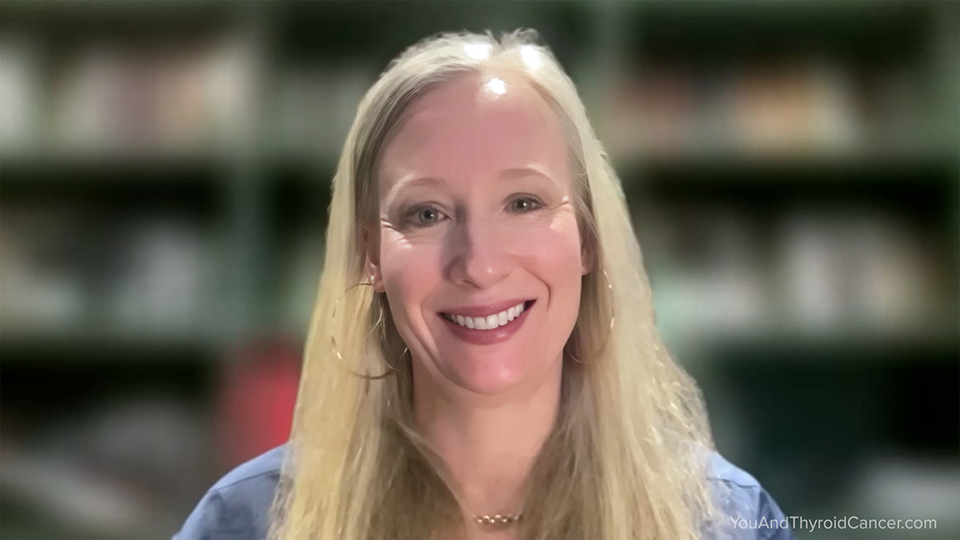
Dr. Catherine Sinclair, a thyroid surgeon and laryngologist in Melbourne, Australia, provides an overview of thyroid cancer and what causes it. She explains that the thyroid is a small gland in the neck that produces hormones, and that thyroid cancer develops when thyroid cells begin growing out of control. Although thyroid nodules are common, at least 90% are benign. She says that for most people, the exact cause of thyroid cancer is unknown, and it is not caused by something they did or could have prevented. Dr. Sinclair also discusses the different types of thyroid cancer and emphasizes that the most common forms are highly treatable.
Watch now
What are the signs and symptoms of thyroid cancer?
Thyroid surgeon and laryngologist Dr. Catherine Sinclair, MBBS(Hons), explains the signs and symptoms of thyroid cancer and when to seek medical advice. She explains that thyroid cancer most commonly appears as a painless lump or swelling in the thyroid or elsewhere in the neck. She notes that many thyroid cancers are found unexpectedly during scans performed for other reasons. Less common symptoms include persistent hoarseness, difficulty swallowing or breathing, and swollen lymph nodes in the neck. Dr. Sinclair emphasizes that most thyroid lumps are not cancer. However, any concerning lump or persistent symptom should be evaluated by a doctor, who may recommend an ultrasound and, if necessary, a biopsy.
Watch now
What are the risk factors for thyroid cancer?
Dr. Catherine Sinclair, a specialist in thyroid surgery, discusses the risk factors for thyroid cancer and notes that most people who develop it have no clear risk factors. She describes that in most cases, thyroid cancer occurs by chance and is not caused by anything a person has done. Known risk factors include exposure to high doses of radiation, such as radiation treatment to the neck for another cancer or exposure to nuclear fallout. Some cases of medullary thyroid cancer can run in families, although most thyroid cancers are not inherited. Dr. Sinclair emphasizes that having a risk factor does not mean a person will develop thyroid cancer, and most people diagnosed with the disease have no known risk factors at all.
Watch now
How is thyroid cancer diagnosed?
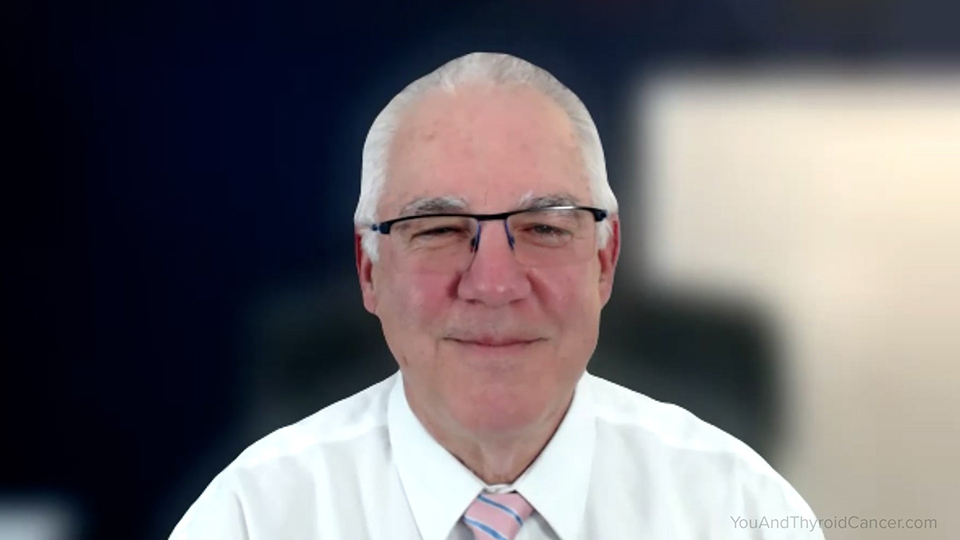
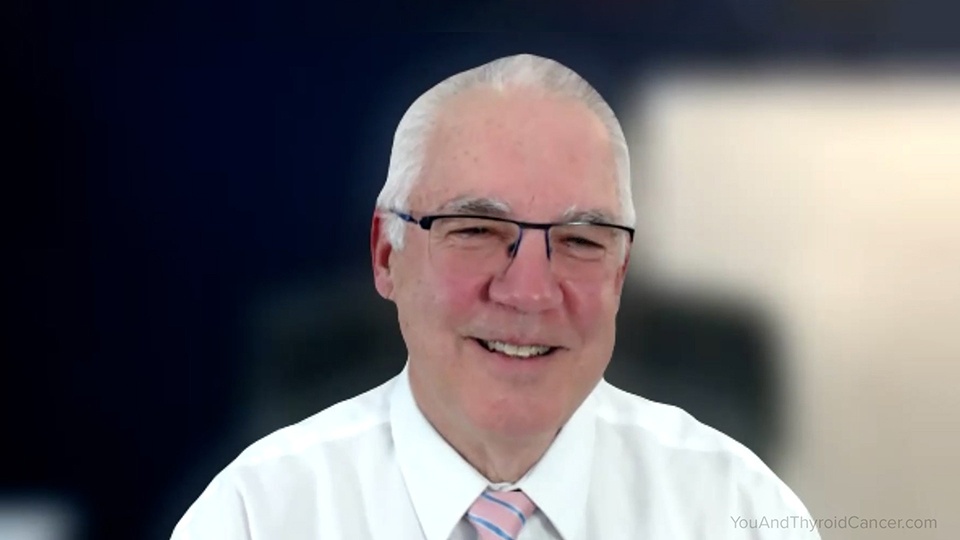
Dr. R. Michael Tuttle, an endocrinologist at Memorial Sloan Kettering Cancer Center in New York City, provides an overview of how thyroid cancer is diagnosed. He explains that thyroid cancer is not detected through blood tests, as thyroid function is usually normal. Instead, an ultrasound is used to examine thyroid nodules and lymph nodes in the neck for suspicious features. If a nodule appears concerning, an ultrasound-guided fine-needle aspiration biopsy is typically performed. Dr. Tuttle further describes that this procedure can confirm whether cancer is present, and can usually identify the type of thyroid cancer, thereby helping guide treatment decisions.
Watch now
How is thyroid cancer staged?
Dr. R. Michael Tuttle, Chief of Endocrinology Service at Memorial Sloan Kettering Cancer Center in New York City, provides an overview of how thyroid cancer is staged and how staging helps guide care. He discusses how staging helps doctors estimate the likelihood of thyroid cancer affecting a person's lifespan or returning after treatment (recurrence). Doctors consider factors such as age, tumor size, the specific type of thyroid cancer, and molecular testing. Dr. Tuttle explains that by examining thyroid tissue under a microscope (histology) helps confirm whether cancer is present and can identify the specific type. Together, he says this information helps doctors estimate individual risk, guide treatment decisions, and develop a personalized follow-up plan.
Watch now
How is thyroid cancer treated?
Endocrinologist Dr. R. Michael Tuttle, MD, provides an overview of how thyroid cancer is treated. He notes that some small thyroid cancers may not need immediate treatment and can be carefully monitored. When treatment is needed, surgery is the most common approach, with most patients successfully treated this way. He discusses that for patients at higher risk of the cancer returning (recurrence), radioactive iodine may be recommended after surgery. Some patients may also need thyroid hormone therapy. Dr. Tuttle further emphasizes that for advanced or more aggressive thyroid cancers that do not respond to these standard treatments, newer medicines have become available, with major advances in treatment over the past decade.
Watch now